
Why Is My Pool Green After It Rains
October 1, 2026
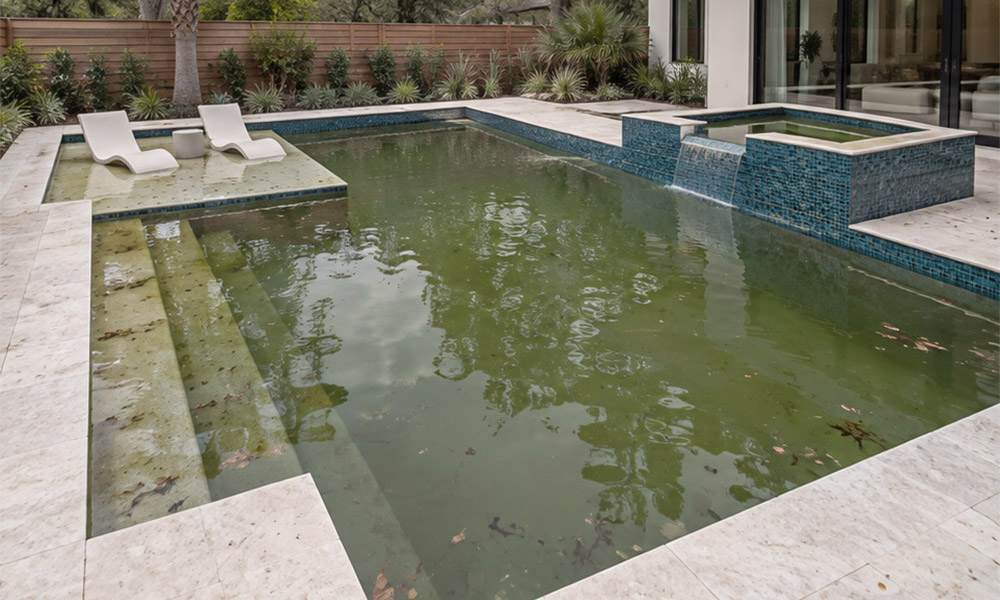
The pool was clear before the rain. A day or two later, the deep end looks green, the walls feel slippery or the water has lost its sparkle. Rain can change a pool's conditions, but the weather alone does not tell you what treatment it needs.
Start with water testing, recent history and a look at circulation. Adding a large dose of shock before those checks can leave the real problem unresolved.
What rain can change
Water level and dilution
Rain adds water and can dilute the chemicals already in the pool, even before the pool overflows. If mixed pool water then leaves through overflow, backwashing or pumping, dissolved chemicals leave with it. The change depends on the incoming volume, the water that leaves and the pool's starting condition.
That is why a rainfall total cannot tell you exactly how much chlorine, stabilizer or salt to add. Test after the water level has been safely managed and the water has mixed. Do not make substantial draining a do-it-yourself shortcut; groundwater and structural conditions need appropriate assessment.
Debris and circulation
Leaves, soil and other material can enter during a storm. A basket full of debris or a power interruption can also affect circulation. Note visible changes and equipment messages once it is safe to approach the pool. Leave flooded or damaged electrical equipment off and have it assessed by a qualified provider.
For preparation and the first checks after severe weather, see our Florida storm pool-care guide.
Water chemistry
Measure pH instead of assuming that rain always moves it in one direction. Free chlorine, pH and stabilizer need to be considered together. The CDC explains that higher pH reduces chlorine's ability to kill germs, particularly above 8.0, and that disinfection takes longer when cyanuric acid is present. CDC water-treatment guidance.
A phosphate result alone does not explain a green pool. PHTA's water-quality committee distinguishes phosphate itself from the algae and other contaminants that increase chlorine demand. Treatment should address the observed problem and the supporting readings. PHTA water-quality myths and misconceptions.
Green water does not always mean the same thing
Slippery surfaces and material that brushes away can suggest algae, but color is only a clue. Metals and organic stains can also affect appearance. Natural Chemistry identifies fill water and equipment corrosion among possible sources of metals, and notes that some organic stains resemble algae. Natural Chemistry stain identification.
Tell your provider whether you recently filled from a well, added a metal-containing product or noticed staining before the rain. Our fill-water and staining guide explains why that history matters.
Keep swimmers out if the bottom cannot be seen clearly or water quality is unsuitable. Clear-looking water also needs appropriate test results before use.
What a useful assessment covers
1. Current free and total chlorine, pH and stabilizer results where applicable.
2. Water level, recent additions and any water replacement.
3. Pool photographs and a short timeline of the change.
4. Visible circulation, equipment warnings and filter pressure compared with its clean reference.
5. Source-water or metal information when the history warrants it.
6. Debris load, surface condition and whether the pool floor is visible.
Avoid layering products while waiting for help. Keep the containers or photograph their labels so the next decision accounts for what is already in the water. Follow product directions and never mix different pool chemicals. CDC guidance on using pool chemicals safely.
How Green to Clear Recovery works
Lasting Summers assesses established algae, debris, chemistry and circulation before quoting Green-to-Clear Recovery. The written scope sets out treatment visits, chemicals and the completion checks.
Work includes ordinary debris removal, brushing, treatment, retesting and vacuuming as appropriate. Progress determines the next step. Filtration and starting conditions affect timing, so a photograph cannot establish a reliable completion date.
Completion includes final verification of clear water, a visible pool floor and suitable tested chemistry. You receive dated photos, final readings, pump status and written aftercare, with a signed acknowledgment of the handoff. The instructions identify who takes over testing, treatment and circulation.
If further work is needed, we explain it and obtain approval before extending the scope. Recovery is not marked complete simply because the quoted visit allowance has been used. Internal filter work, draining and repairs are handled through separately approved arrangements with qualified providers.
One-time work requires a 35% deposit credited to the approved total. The remaining 65%, plus completed approved additions, is due upon receipt after the agreed work and verification are complete.
Where routine care fits
Complete Pool Management and Signature Pool Management address developing algae within their included cleaning and routine treatment scope. Established algae requiring staged recovery is separately assessed. Ordinary debris already included in your maintenance plan is not charged again because a storm brought it down.
Every residential plan includes one scheduled weekly visit and routine chlorine, pH and alkalinity products, calcium, stabilizer and salt as needed for normal maintenance. Cleaning responsibilities depend on the chosen plan. All spas and hot tubs are quoted as additional services in every package. Compare the details in our weekly pool-management plans.
Pool equipment repairs are coming soon
Pool equipment repairs are coming soon as we complete the remaining Florida state requirements. Once available, recurring maintenance clients will receive priority over new repair-only customers, subject to availability and urgency. Repairs will be quoted separately.
Ask us about your green pool
For homeowners in Gainesville and Haile Plantation, a current photo and a short history are useful first steps. Send your address and what changed before the water turned green so we can review the condition, route availability and the appropriate written scope.
Request a pool-care assessment or call 352-231-8766.
